


How Long Do Brake Rotors Last?
Whether you’re driving a compact Civic or a spacious Pilot, you’ll want to ensure that your vehicle’s brakes are in great condition. Bringing your car to a swift stop is essential to keep you and your fellow motorists safe on the road.
Brake rotors are a key part of your brake system that you need to maintain and replace if they’re worn. Here’s a guide prepared by our Honda experts in Norwood on how to do that.
Brief overview:
- Typical rotor lifespan: ~30,000–70,000 miles (varies by driving and environment)
- Common warning signs: vibration/pulsation, grinding, longer stopping distances
- Next step: schedule an inspection if braking feels different or noisy
What Are Brake Rotors?
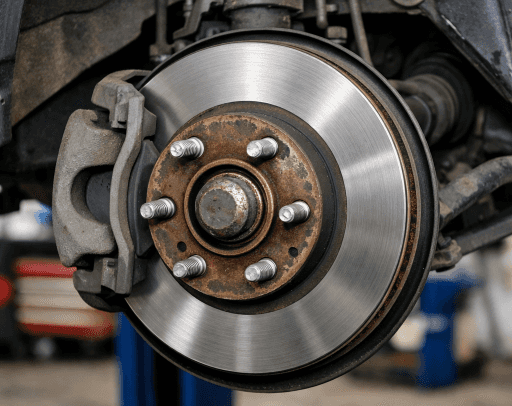
Brake rotors are metal discs that are attached to your vehicle’s wheels. When you push down on the brake pedal, the calipers squeeze against each side of the rotor and cause the vehicle to slow down. The harder you push the brake pedal, the harder the calipers squeeze and slow the vehicle more quickly.
How Long Do Brake Rotors Last?
As you can imagine, brake rotors are subjected to a lot of wear and tear. After bringing your sedan or SUV to a stop numerous times over a period of several years, your vehicle’s brake rotors will eventually require replacement.
Rotor lifespan varies by driver and conditions, but many vehicles fall in the 30,000 to 70,000 mile range before rotors need resurfacing or replacement. For drivers who put on around 10,000–15,000 miles per year, that can translate to roughly 2 to 7 years, but the best indicator is how the brakes feel and what an inspection shows.
The best way to check on the condition of your rotors is to take your vehicle for regular servicing at a reliable auto service center, where trained mechanics can inspect your rotors for any problems.
One factor influencing your brake rotors’ life span is your driving style. If you often drive fast and slam on the brakes hard, this can cause brake rotors to wear out more rapidly. Rotors are also impacted by your local environment. For example, coastal regions with higher levels of salt in the air can cause rotors to corrode at a quicker rate than parts of the country with lower salt levels.
Additionally, you may need to replace your rotors sooner if you live in an area with excessive dust or dirt on the roads.
A final factor that may reduce your rotors’ life span is if you do a lot of city driving. Typically, city driving involves a lot of stopping and starting due to traffic, which requires your brakes to work harder than if you primarily drive long distances on the highway.
How Can You Tell When Rotors Need Replacing?
There are several warning signs you should look out for to help you decide when your rotors require replacement. Since the braking system is one of your vehicle’s most important safety measures, it’s important to take all of these warning signs seriously and consult with a professional auto mechanic if you’re unsure how to perform brake maintenance yourself.
- Vibration or pulsation in the brake pedal or steering wheel
- Grinding or scraping sounds when braking
- Squealing (often pads, but worth inspecting)
- Longer stopping distances or a “soft” pedal feel
- Visible grooves, heavy rust, or cracking on the rotor surface
The first indication that your rotors may need replacing is if your car takes longer to come to a stop than usual. This can indicate rotor wear, worn pads, or another brake issue — an inspection will pinpoint the cause. This problem could also be linked to other issues with your braking system, such as worn brake pads or an issue with your brake fluid. A quick brake inspection at our Norwood service center will help to get to the bottom of the problem.
Another warning sign is if you hear strange sounds or feel vibrations when you hit the brake pedal. Sounds can include squealing and grinding, which may be caused by damage to your rotors or worn out pads. Grinding occurs when your pads are totally worn through, which results in part of the brake pad scraping against the metal rotors. Vibrations can result from deformations or cracks on your rotors, which can occur when they near the end of their working lives.
 Can Brake Rotors Be Resurfaced?
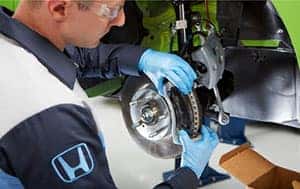
When an issue develops with your brake rotors, it doesn’t always mean you need new ones. In some cases, rotors can be resurfaced (also called machining) to restore a smooth braking surface. Resurfacing is only an option if the rotor is in good enough condition: without cracking, severe corrosion, or damage that can’t be corrected.
However, it’s important never to machine your rotors below the manufacturer’s minimum thickness (sometimes called discard thickness). This point is particularly crucial because many modern rotors are designed with less extra material than older designs, so there may be less room for resurfacing.
If you’ve been sticking to a regular maintenance routine, including replacing your brake pads before they wear through, your chances of being able to get your rotors resurfaced will improve. That’s because driving with worn brake pads increases the strain on your rotors, causing excessive wear and tear.
When Is It Time to Replace Brake Rotors?
If resurfacing isn’t an option, you’ll need to replace the rotors. If you’re doing this yourself, make sure mounting surfaces are clean and free of debris so the new rotors sit flush and wear evenly. Rotors are typically replaced in pairs on the same axle (both fronts or both rears) to help maintain even braking. If your vehicle pulls to one side during braking, an inspection can help pinpoint the cause. Pads are often replaced at the same time, depending on wear.
Now that you know a bit more about brake rotors and maintenance, our Honda-certified service technicians can help with routine brake service and rotor replacement. During your appointment, a technician can perform a thorough brake inspection at our Norwood service center and walk you through what we find and your options. If replacement parts are needed, we can source Honda-approved parts through our parts center.
Schedule a brake inspection at our Norwood service center today!
Shopping for a quality pre-owned vehicle? Explore our used selection, and ask about our current guarantee and return policy for details and terms.
0 comment(s) so far on How Long Do Brake Rotors Last?